
In Memory
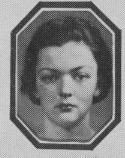
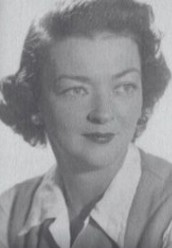
Marion (O'Brien) Donovan-Butler
Oct 15, 1917 - Nov 4, 1998
Marion O'Brien Donovan was born in 1917 in Fort Wayne, Indiana. Her father and his twin brother invented an industrial lathe that could be used in grinding automobile gears. So popular was the "South Bend lathe" that the brothers' factory manufactured nothing but that lathe.
Marion's mother died when Marion was only seven, so Marion frequently spent her after-school time at the factory. Her father encouraged her curiosity, and when she wanted to create a new form of tooth powder, he helped show her what she needed to do to come up with her product. In the process he taught her a can-do spirit of problem solving.
After college, Marion took a job as assistant beauty editor at Vogue and met James Donovan, a leather importer. The couple married and moved to Westport, Connecticut and started a family.
Donovan got tired of using cloth diapers on her children. When she got the children up after a nap, the odds were good that the cloth diaper had leaked so she not only had to change the diaper but she generally had to change and launder all the bedding as well.
Feeling that other mothers were probably similarly annoyed, Donovan sat down at her sewing machine with a shower curtain and began fashioning what she called a "boater" (to her, it looked like a boat). After much experimentation—and many shower curtains later—she created a reusable, leak-proof diaper cover.
The final product was made of nylon parachute cloth which seemed to reduce the incidence of diaper rash by letting the skin breathe. She also attached snaps rather than using the safety pins that most diapers and diaper covers required; with a wriggling baby, annoying pin pokes to either mother or baby were entirely possible, and the snaps solved that problem.
In 1949 Donovan successfully marketed the diaper cover to Saks Fifth Avenue. Shoppers made it an instant success. Adam Gimbel, president of Saks Fifth Avenue at the time, wrote to Donovan: "It is not often that a new innovation in the Infants' Wear field goes over the with the immediate success of your Boaters."
By 1951 she received the four patents she had applied for on the product. Later that year she sold the rights to Keko Corporation of Kankakee, IL for $1 million.
She used that money to fund other inventions; her goal was always to create products that made life more convenient and more organized.
Donovan's next goal was to dispense with the need to do so much laundry. She wanted to create a disposable diaper, and she set out to find a different type of paper that would be absorbent but also pull the moisture away from the baby's skin to prevent diaper rash. She came up with a prototype of a paper diaper and began visiting paper manufacturers; she found they were not interested. The men all responded with the fact that the disposable diaper was "not necessary."
Finally, after almost ten years of shopping the idea around, she received interest from Victor Mills who was to manufacture Donovan's idea as Pampers.
During the 1950s, Donovan had also been working on getting a degree in architecture. In 1958 she was one of three women in her class at Yale to receive this degree.
Between 1951-1996, Donovan received a total of twenty patents. She created the "Zippity-Do" an elastic cord that could be temporarily attached to a zipper on the back of a dress; then the wearer could use the cord to pull up the zipper by reaching over her shoulder. She also invented a soap dish that drained into the sink, and the DentaLoop, a dental floss circle that could be used by see-sawing the loop between the teeth. Her invention, The Big Hangup, was a hanger that could hold 30 garments neatly and store them conveniently.
Companies also hired her to consult on product development, and she used her knowledge of architecture to design her own home.
Marion Donovan's philosophy –that it was always worth looking for ways to improve even the simplest things—paid off.
~~~~~~~~~~~~~~~~~~~~~~~~~~~~~~~~~~~~~~~~~~~~~~~~~~~~~~~~~~~~~~~~~~~~~~~~~~~~~~~~~~~~~~~~~~~~~~~~~~~~~~~~~
DONOVAN BUTLER- Marion. Passionate inventor died November 4, at Lenox Hill Hospital, NYC. Marion O'Brien, born October 15, 1917 in South Bend, Indiana. Beloved wife John F. Butler, who died July 22, 1998.
Awarded dozens of Patents in a sixty year career. Devoted to solving practical problems in personal health, household and financial conveniences industrial design. Master degree, Yale University, Architect School, 1958, B.A. Rosemount College, PA, 1939. Active member of Kips Bay Boys & Girls Club, Women's Committee.
Loving mother of Christine Donovan, NYC, Sharon Donovan Dowdd, New Orleans, Dr. James F. Donovan Jr. Oklahoma City and grandmother of Laura O'Brien Dowdd, Edward Seamus and William Miles Donovan.
Memorial Mass will be given on December 7, 1998 at 10:30 A.M. at St. Jean Baptiste Catholic Church, Lexington Ave at 76th St
Article from 15 Nov 1998 Daily News (New York, NY)
~~~~~~~~~~~~~~~~~~~~~~~~~~~~~~~~~~~~~~~~~~~~~~~~~~~~~~~~~~~~~~~~~~~~~~~~~~~~~~~~~~~~~~~~~~~~~~~~~~~~~~
NEW YORK — Marion Donovan, a one-time housewife who invented the forerunner of the disposable diaper and went on to hold more than a dozen patents, died Nov. 4. She was 81. In 1946, when her newborn second daughter proved as reliable a source for soggy cloth diapers as was her first, Donovan began searching for a way to seal in wetness without sealing out air. After years of working with waterproof shower curtain material. Donovan concocted the Boater, a reusable diaper cover made from nylon parachute cloth Along the way she replaced safety pins with plastic snaps, too. The diaper covers were a smash hit when they went on sale at Saks Fifth Avenue in 1949 By 1951, Donovan. who had relinquished a job as an assistant beauty editor at Vogue, had sold her patent rights for $1 million and was working on bigger and better things — namely replacing cloth diapers with disposable absorbent paper. A decade later, babes were wearing Pampers, the first mass produced disposable diaper.
Sources: Ancestry.com, Newspapers.com and FindAGrave.com
03/09/2026 EJS
https://www.findagrave.com/memorial/176583928/marion-donovan-butler
|